
Brussels, 21 October 2026
dbfactory launches pgCellar: PostgreSQL backups that prove they restore
pgCellar is a control room on top of Barman. Every week it actually restores your PostgreSQL backups and hands you a dated report.
Almost every small company has PostgreSQL backups. Almost none has restored them. A command-line tool says OK as long as the files are there, not as long as the database starts. You find out on the worst day. Backup tools with a web interface mostly run dumps: they bring you back to last night, not to 14:32, just before the bad query. NIS2 and insurers now ask you to prove that recovery works.
pgCellar gives each server's state in one sentence. It shows how far back you can go and where the WAL has gaps, and it restores to a point in time. Its automatic drill restores the latest backup, starts the copy with the PostgreSQL binaries of its version, looks inside, stops it and writes a dated PDF report. Alerts to Telegram, mail and a signed webhook, a JSON API, Prometheus metrics. One Go binary, one Docker image, a configuration in text files in git. The configuration stays readable: one pgcellar.yaml file, every change validated then committed in git. It is a tool on top of Barman, not a replacement.
A public read-only demo is open at demo.pgcellar.dbfactory.io (demo / demo), and the documentation is public. Early access is open, with a free beta for the first people who sign up. Free: 2 servers, 0 EUR. Pro: up to 10 servers, 490 EUR a year excl. VAT. Business: unlimited servers, 1,490 EUR a year excl. VAT. The license, FSL-1.1, never blocks a backup, a restore or a drill. Installing takes about an hour, with an existing PostgreSQL. A managed version does not exist yet. pgCellar is written with AI agents, under its author's direction: every version goes through automated tests, a review and a real restore.
« A backup you never restored is a guess. pgCellar turns it into proof, every week. » Gilles Fauvie, founder of dbfactory
About dbfactory
dbfactory is the PostgreSQL business of CODE79 SComm, a Belgian company. PostgreSQL audit, backup, restore and high availability for small and medium companies. Its founder, Gilles Fauvie, has been a PostgreSQL and Oracle DBA for twenty years.
Press contact
Gilles Fauvie, dbfactory - contact@dbfactory.io - dbfactory.io

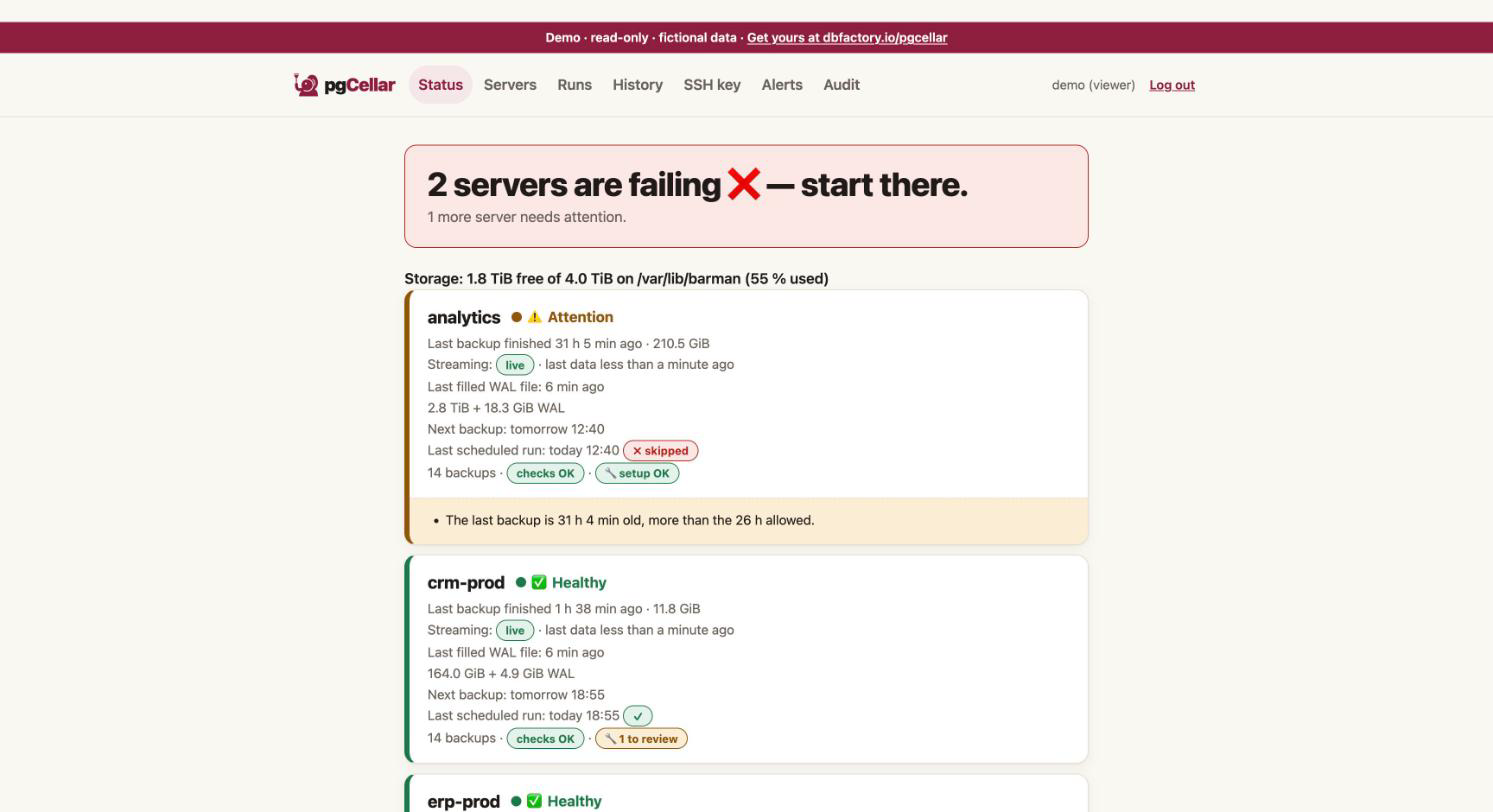 Status (.png)
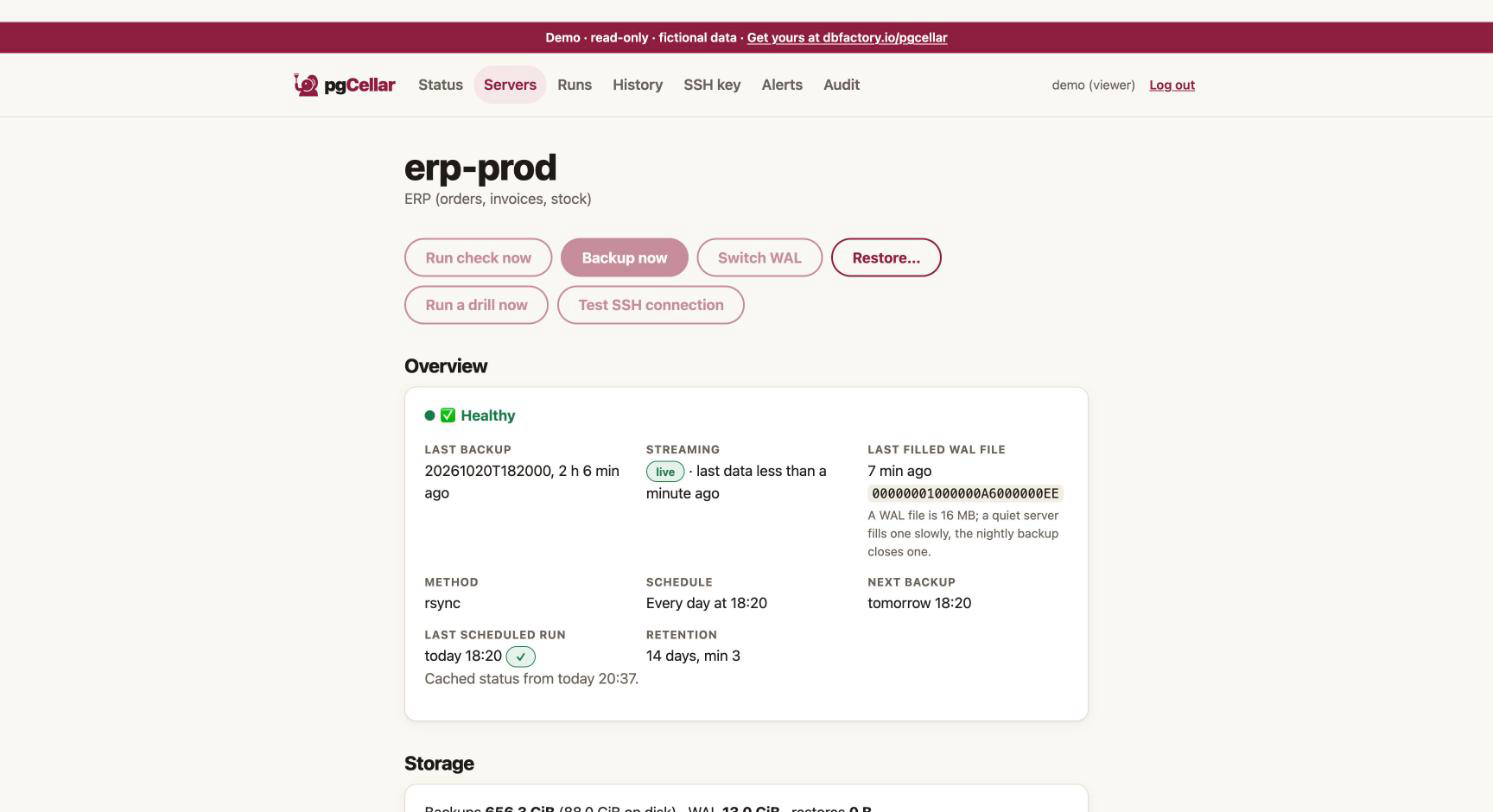 Server page (.png)
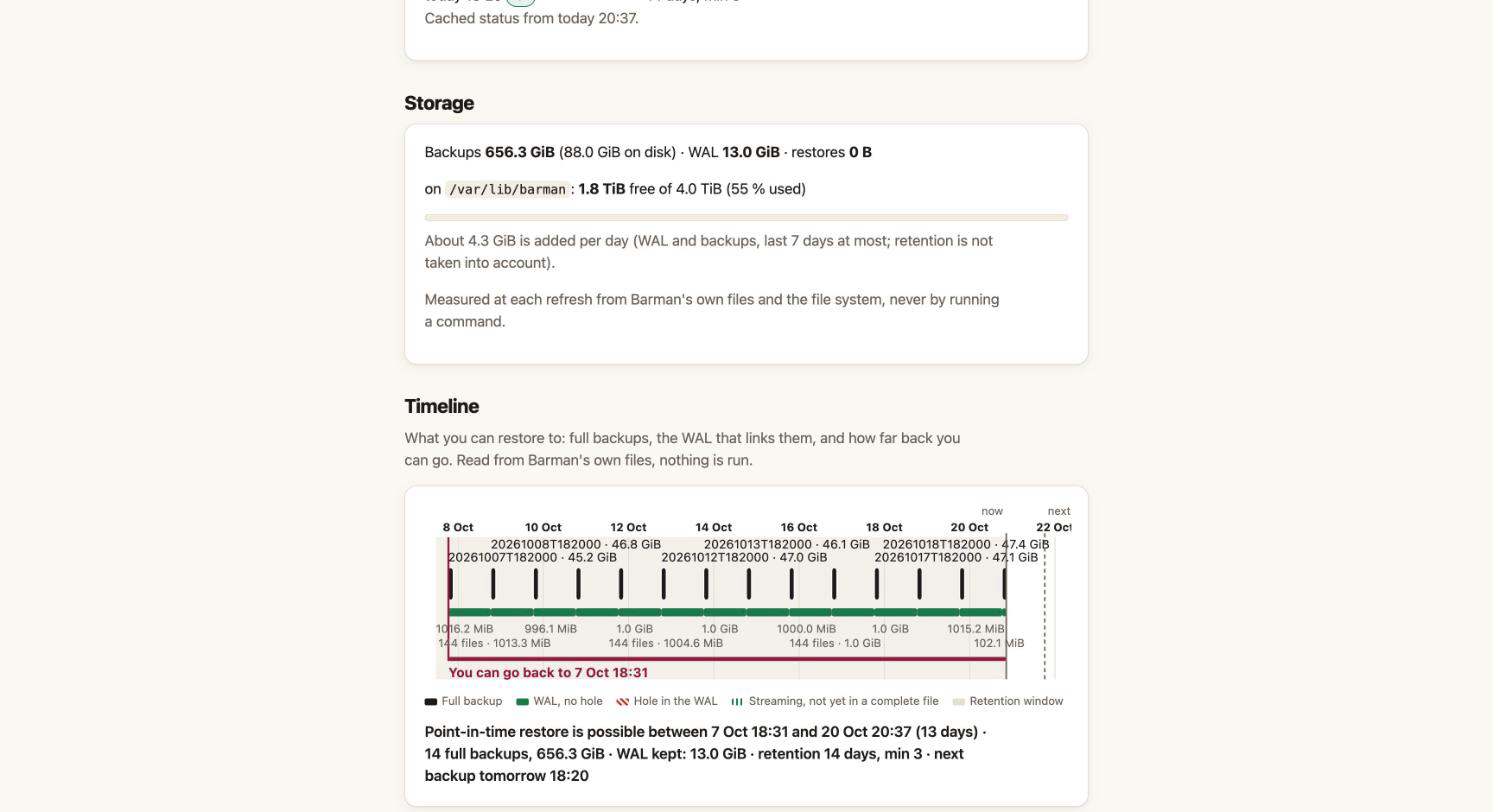 Timeline (.png)
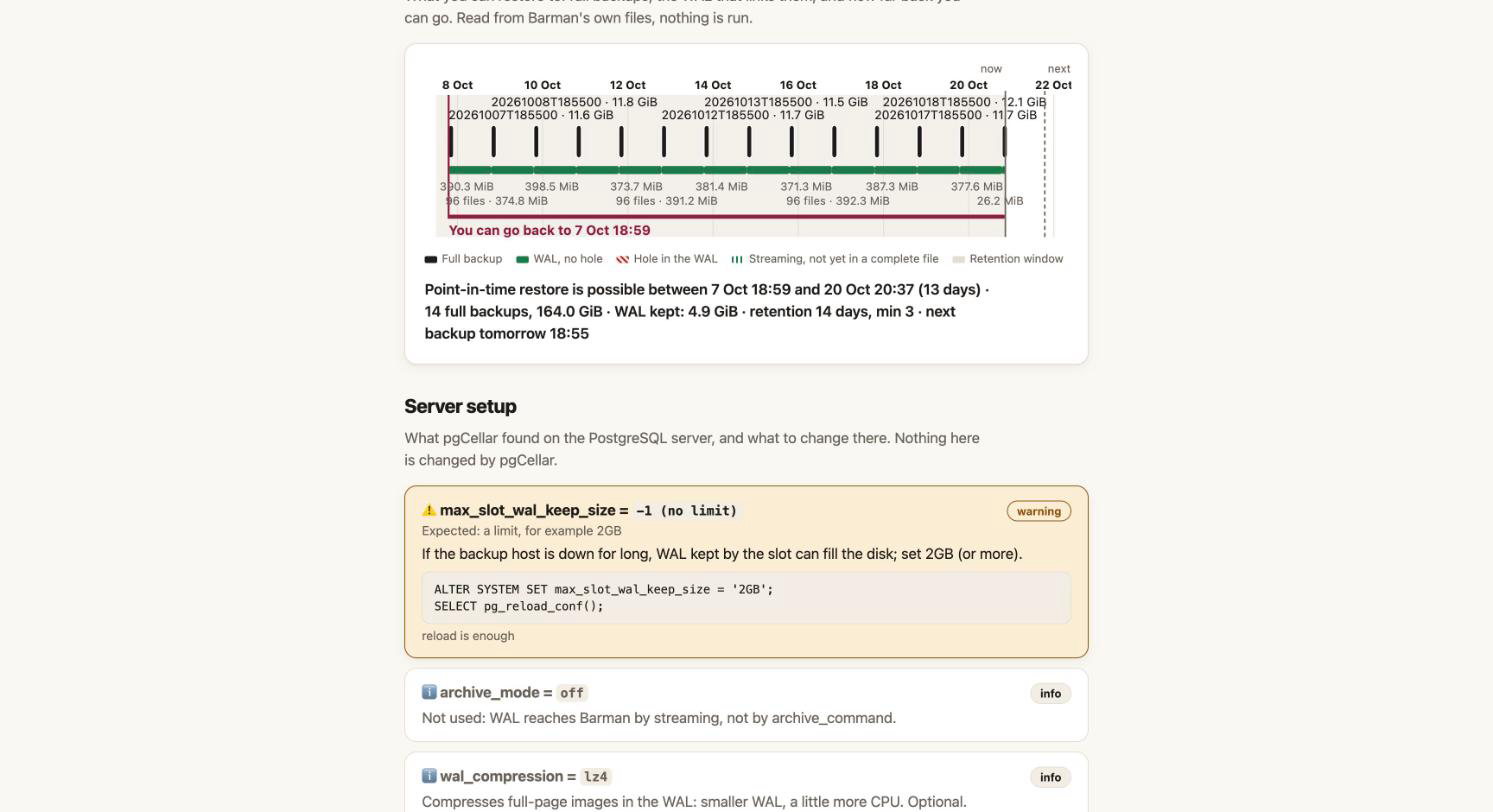 Server setup (.png)
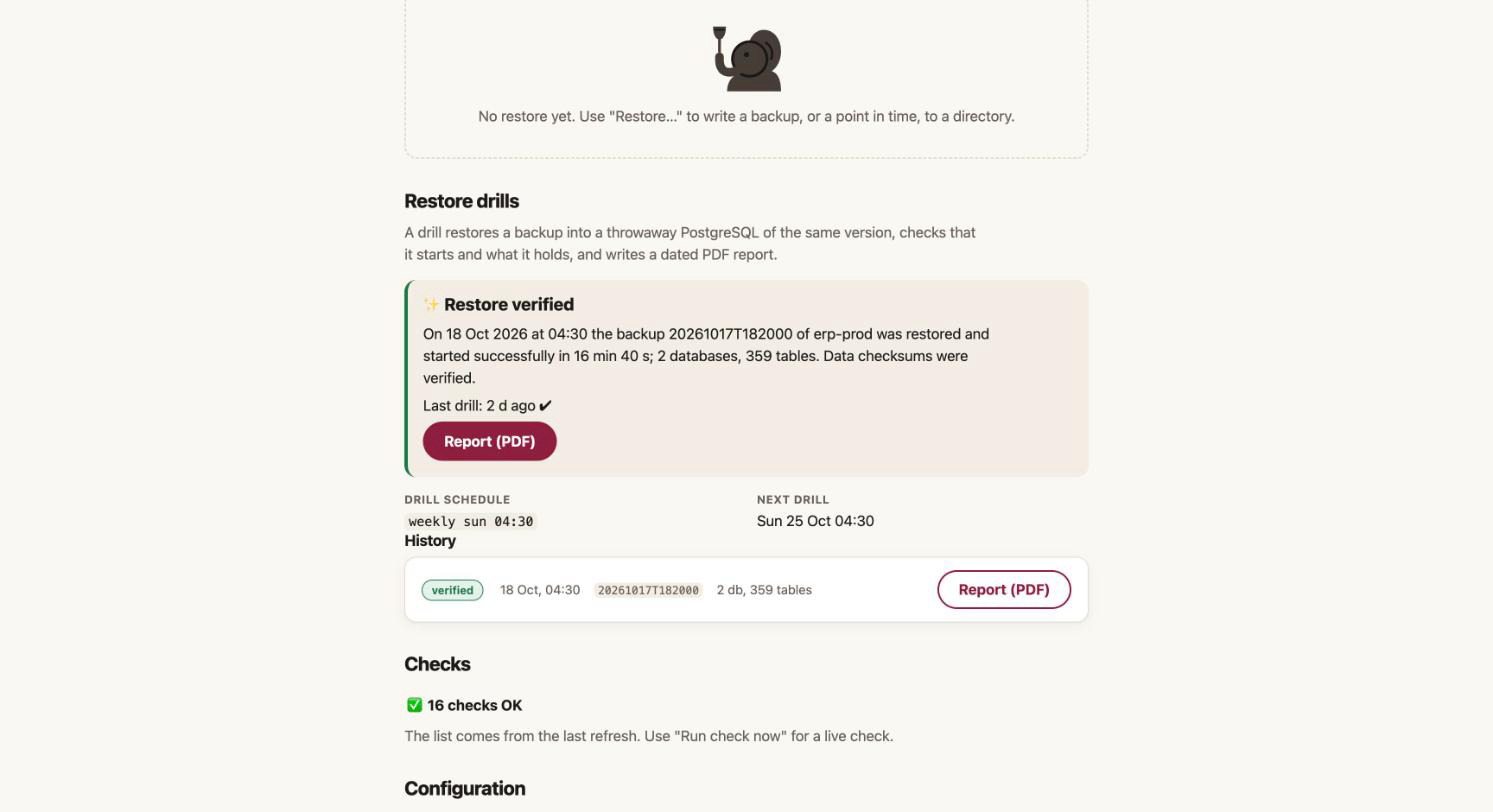 Restore drills (.png)
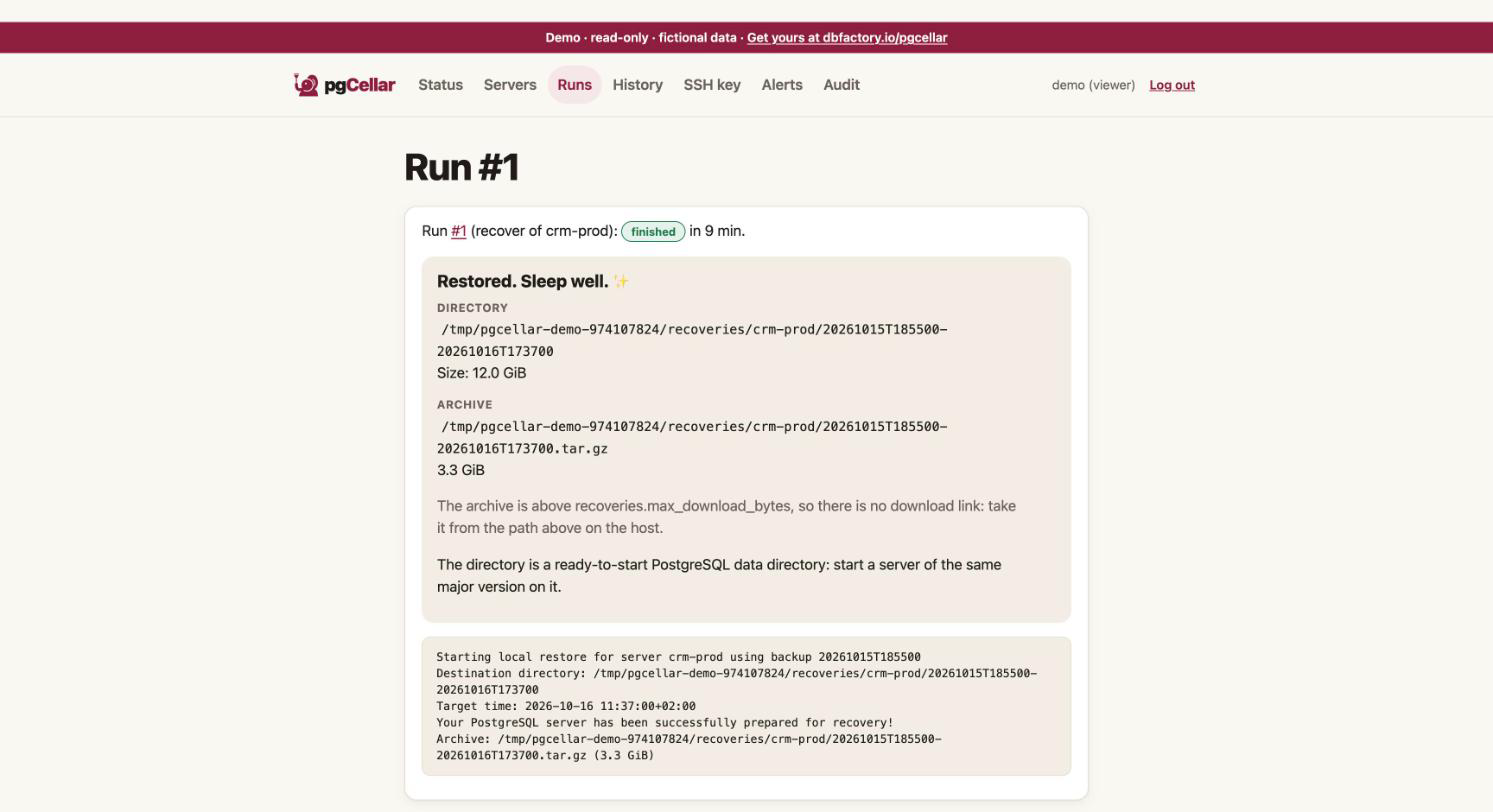 Restore (.png)
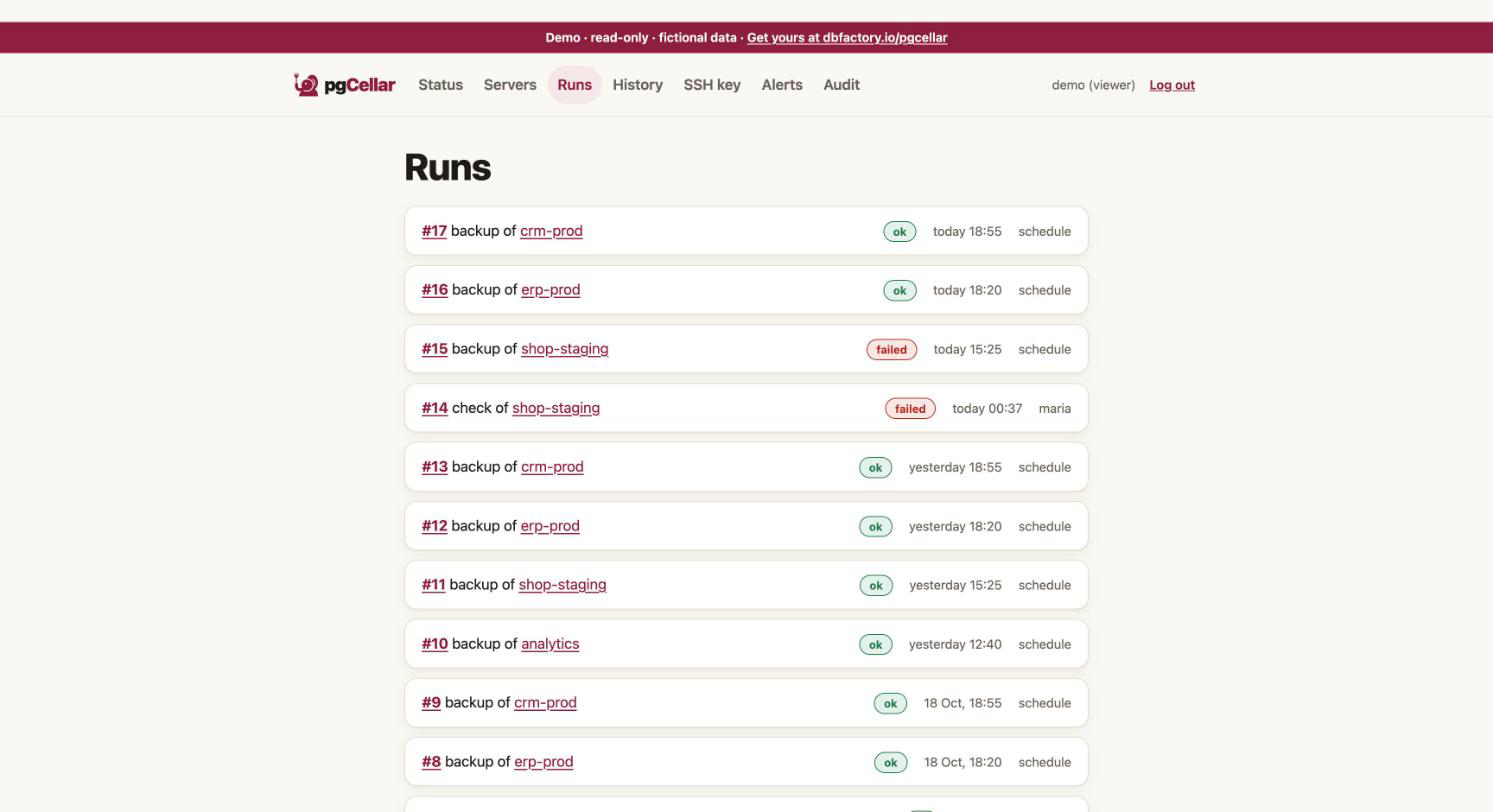 Runs (.png)
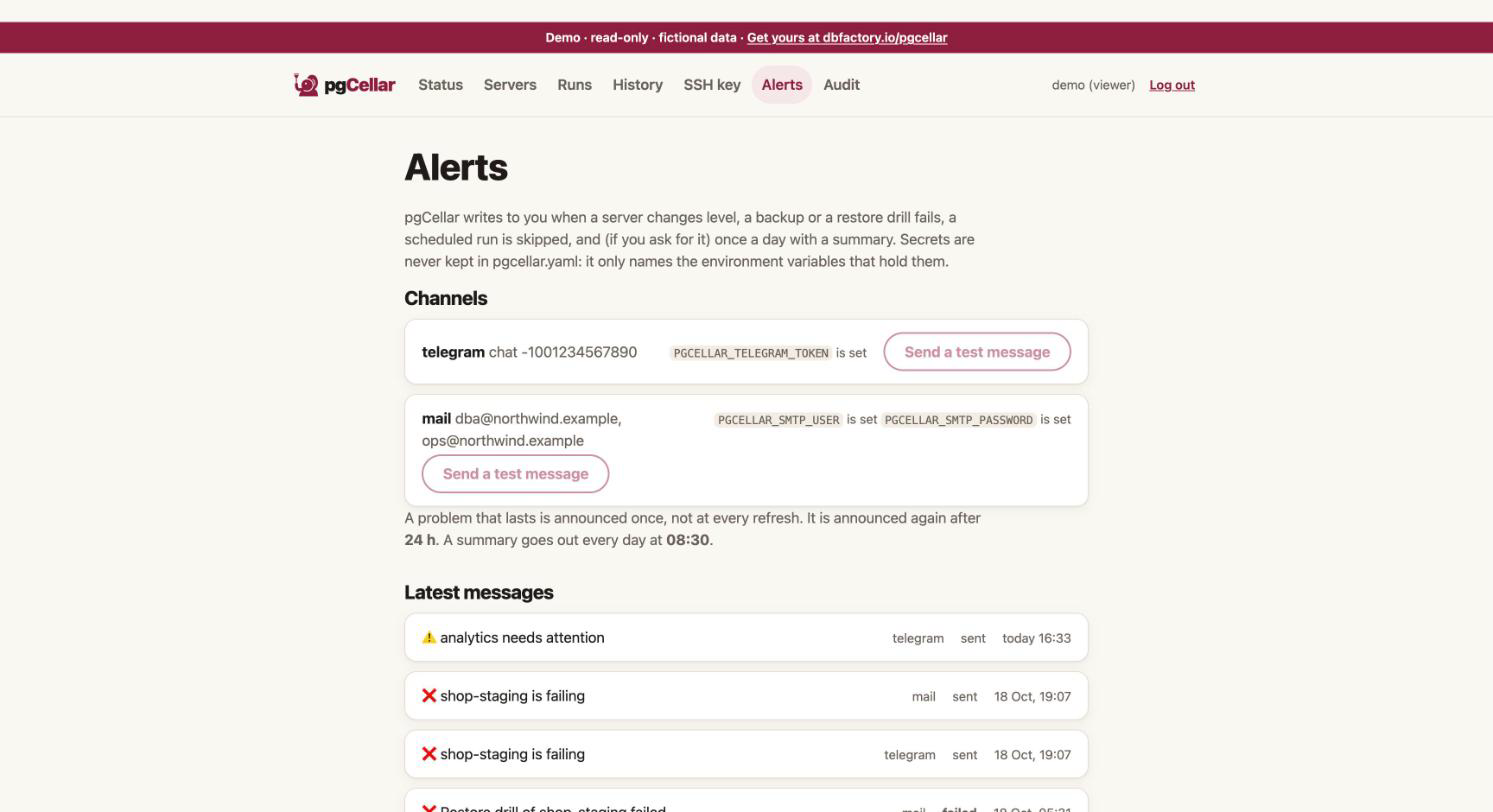 Alerts (.png)